A Growing Community
As Washtenaw’s Muslim population grows, organizations in the area are expanding their spaces for worship, education, and programs. From MCA and At-Taqwa to Hidaya, these projects reflect how Muslim institutions are adapting to serve a growing community.
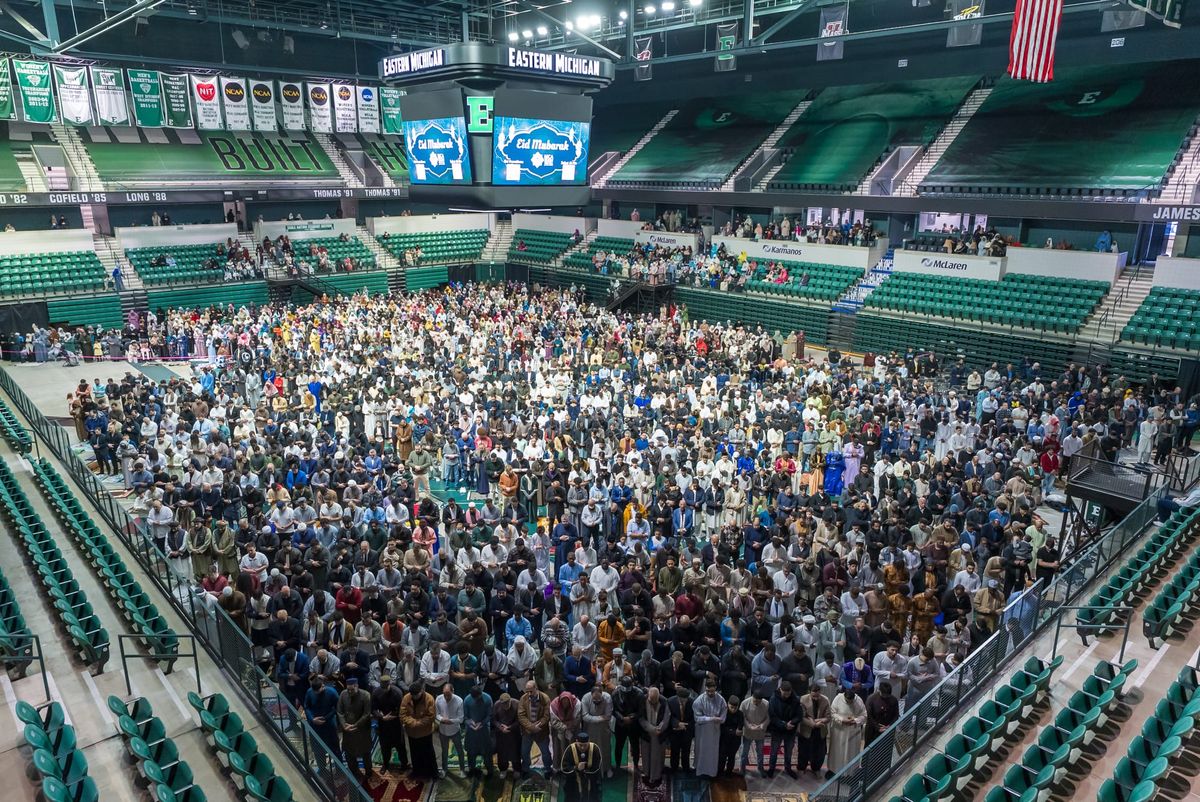
Washtenaw County’s Muslim community continues to grow, and with it, the need for larger spaces dedicated to worship, education, and community engagement. Across the county, multiple Muslim organizations are pursuing major expansion projects, from the long awaited Hidaya Muslim Community Center in Pittsfield Township, to Masjid At-Taqwa’s search for a larger home, and the Muslim Community Association of Ann Arbor’s plans for a new multipurpose center. While each project hopes to serve different purposes, together, they reflect how the area’s Muslim population and its institutions are continuing to evolve.
Among these projects, none has had a longer or more complicated path than Hidaya Muslim Community Center. The project, located near the intersection of Ellsworth and Golfside Roads in Pittsfield Township, spent more than a decade moving through legal battles, public opposition, and planning discussions before finally receiving approval in 2025. However, while Hidaya’s approval marked a major milestone for the Muslim community here in Southeast Michigan, the center has not yet become the community hub many envisioned it to be.
Hidaya's story began around 2011, when Michigan Islamic Academy (MIA) proposed developing an Islamic school at the site. Some neighboring residents opposed the proposal, leading Pittsfield Township officials to reject it over concerns including traffic and neighborhood impact. The decision led to years of legal battles, such as a lawsuit supported by the Council on American Islamic Relations (CAIR) and a separate lawsuit filed by the U.S. Department of Justice in 2015, alleging the township violated the Religious Land Use and Institutionalized Persons Act (RLUIPA). The dispute ended in 2016, when Pittsfield Township agreed to a $1.7 million settlement and a consent judgment allowing the development to proceed.
Nearly a decade later, the project reached another milestone when township planners unanimously approved the final site plan in May 2025. The approved approximately 58,000 square foot community center is planned to include prayer halls for men and women, classrooms, multipurpose rooms, activity spaces, a gymnasium, and 11 duplex buildings containing 22 housing units. Project leaders, such as Mohamad Issa, have previously said the center is intended to serve not only Muslims, but also the general public through educational, cultural, and community programs.
Despite receiving approval, the center hasn’t yet opened. With an empty lot, public records, and available information, none show that construction has begun or will begin soon. Attempts to reach Hidaya representatives for additional information about the project’s current status have not resulted in an interview or statement. This does not necessarily indicate a lack of willingness to comment, but it leaves unanswered questions about when the approved plans will become reality for the community.
Masjid At-Taqwa, which has served Muslims in Ann Arbor since 2008, is also preparing for a new chapter. After years of operating from its current location on Golfside Road, the masjid recently purchased a former church on Hewitt Road to better accommodate its growing congregation. According to At-Taqwa’s manager, Mohamed Sulieman, the move was driven by parking limitations and the high costs of expanding the current property to meet township requirements. Beyond providing additional prayer space, the new facility is expected to create opportunities for expanded educational programs, community gatherings, and future services. “The purpose of a masjid is a place where the community meets and plans and connects,” he said. “If someone needs support or they’re going through a hard time, they can get that support that they need.”
The additional space will also allow the masjid to expand programming for young Muslims and families. Sulieman said At-Taqwa hopes to continue its youth lectures, Quran classes, and monthly gatherings while introducing new activities as the community grows. "The youth need to come together, have a little reminder, as well as get to know each other," he said. Looking ahead, the masjid also hopes to create spaces for studying, exercise, and other recreational purposes that will continue serving Washtenaw’s growing Muslim population. The masjid expects to hold its grand opening on August 15th, after completing renovations to prepare the building for worship and community use.
Meanwhile, the Muslim Community Association (MCA) of Ann Arbor is also pursuing a larger vision for the future. Founded in 1972, MCA has long served as one of the largest Muslim institutions in the area, providing religious services, educational programs, youth activities, and community events. The organization is planning a major expansion that would create additional space for prayer, recreation, businesses, and community programming. Khaled Felwa, the Executive Director of MCA, said the goal is to create more than just a place for worship. "We're going to have an area for prayer for the brothers and the sisters. We're going to have a gym... playground for the kids... cafes, restaurants... a senior citizen area," he said.
Felwa also emphasized that the project's success depends on community involvement, especially from younger Muslims. “We need action. We need community. We need people to see that the community cares about this,” he said. While he acknowledged that many young Muslims already contribute to the community, Felwa said that continued youth involvement will be important as the project moves forward. He encouraged younger members of the community to take an active role in building the future of Muslim institutions in Washtenaw.
Together, these developments show that Washtenaw County’s Muslim community is not relying on one single institution to meet its growing needs. Instead, different organizations appear to be developing spaces with different purposes, and to serve different needs. Hidaya represents the future vision for a large scale community center designed around education, worship, and broader public engagement. At-Taqwa reflects the growth of a smaller congregation seeking a permanent home, to house many more worshippers. MCA represents an established institution expanding its capacity to serve a diverse and growing population.
The question moving forward is not whether the community needs more spaces, but how these organizations will work together. As multiple centers expand, they could provide more opportunities for education, youth programs, social services, support, and greater involvement from younger generations who will help shape these institutions in the years ahead of us. While Hidaya’s future remains uncertain and to be questioned further, the continued growth of At-Taqwa and MCA demonstrates that the community’s need for gathering spaces, educational programs, and services continues to increase.
Comments ()